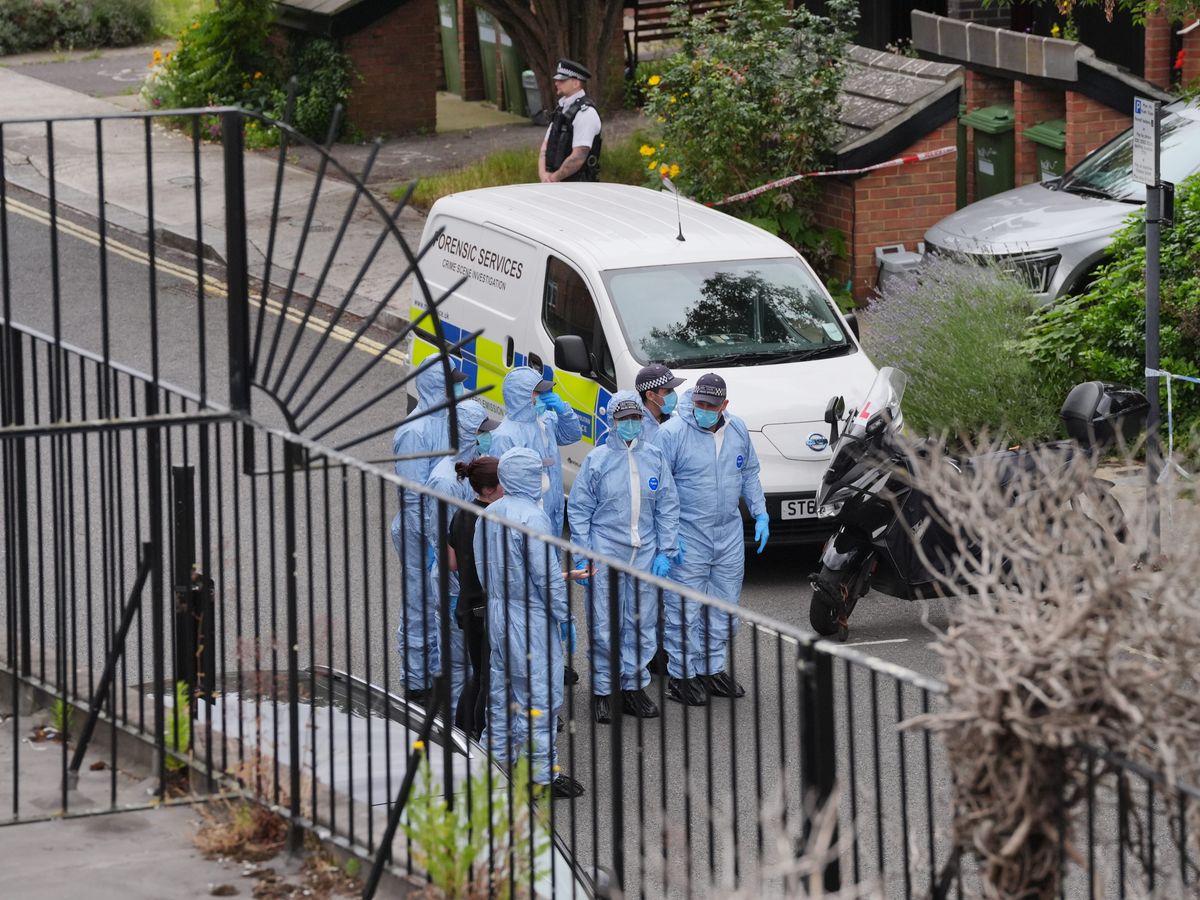
In a case that has shocked the community, Yostin Andres Mosquera, a 35-year-old Colombian national, has admitted to the manslaughter of Albert Alfonso, one of the two men he is accused of killing in a gruesome incident last July. The bodies of Alfonso, 62, and Paul Longworth, 71, were found dismembered and stuffed into suitcases near the Clifton Suspension Bridge in Bristol. Mosquera, however, denies the charges of murder for both victims, setting the stage for a closely watched trial.
The prosecution, led by Deanna Heer KC, has made it clear that Mosquera's plea to manslaughter is not accepted, and the trial will proceed on both counts of murder. The court heard disturbing details of the case, including that the attack on Alfonso was recorded, with Mosquera allegedly engaging in extreme sexual acts with Alfonso before the killing. The relationship between the three men was described as complex, with Mosquera reportedly visiting the UK multiple times to spend time with the couple, who had entered into a civil partnership earlier in 2023.
Neighbors remembered Alfonso and Longworth as a happy and friendly couple, with Alfonso working as a swimming instructor and Longworth as a retired handyman. The case has drawn attention not only for its brutality but also for the intricate relationships involved, including Mosquera's role as a 'pornographic performer' and the alleged financial arrangements between him and Alfonso.
As the trial opens, the community and the families of the victims await justice. The prosecution is expected to present evidence that Mosquera's actions were premeditated, while the defense may argue the manslaughter plea reflects the true nature of the events. The case underscores the tragic consequences of violence and the complexities of human relationships.
King Charles has joined forces with Oscar-winning actress Cate Blanchett in a previously unpublicized podcast recording focused on global conservation efforts. The 22-minute episode, titled "Unearthed: The Need For Seeds," was recorded in the private gardens of Windsor Castle in July and features the monarch alongside Blanchett and Kew seed scientist Dr. Elinor Breman. This marks only the second podcast recording in the King's public life, demonstrating his continued commitment to environmental causes that have defined much of his royal work.
The conversation centered on the Millennium Seed Bank at Wakehurst, West Sussex, which King Charles originally opened in 2000 and has maintained an active interest in since. The facility represents one of the world's most ambitious conservation projects, having collected, cleaned, dried and stored nearly 2.5 billion seeds from more than 40,000 plant species in walk-in freezers maintained at minus 20 degrees Celsius. Both the King and Blanchett, who became Wakehurst's first ambassador last year, emphasized the critical importance of this work in preserving global biodiversity.
During the discussion, Blanchett expressed concern about the rapid loss of natural habitats, noting that "97 percent of wildflower meadows have been decimated" in recent decades. She highlighted the disconnect between perceived natural beauty and actual ecological fragility, stating that "there is an urgency to the work that the seed bank does." The King echoed this sentiment, reflecting on his long-standing awareness of environmental degradation, particularly the damage to flower-rich meadows since the postwar period.
The podcast also touched on broader conservation challenges, including the need for increased funding and public awareness. Blanchett pointed to the frustration of seeing "so many extraordinary initiatives right there ready to be scaled up" but lacking financial support and direction. King Charles acknowledged both the progress made and the need to accelerate conservation efforts, stating that while the seed bank's work is "wonderful," the process must speed up to address escalating environmental threats facing plant species worldwide.