.jpg?trim=0,0,0,0&width=1200&height=800&crop=1200:800)
Chancellor Rachel Reeves has warned that the government faces difficult economic choices ahead, hinting at potential tax rises in November's Budget while defending her commitment to fiscal responsibility. In her speech at Labour's annual party conference in Liverpool, Reeves pledged to maintain low taxes, inflation, and interest rates but acknowledged that international events and long-term economic damage have complicated the government's fiscal decisions.
The chancellor's address came amid growing speculation about how the Treasury will address a significant shortfall in public finances. Economists have warned that tax increases or spending cuts will likely be necessary for Reeves to meet her self-imposed borrowing rules. When pressed about potential tax hikes in a BBC interview, Reeves pointed to wars in Europe and the Middle East, US tariffs, and rising global borrowing costs as factors influencing the government's economic calculations.
Reeves used her conference speech to reinforce her reputation as a fiscal hawk, declaring she would "take no risks with the trust placed in us by the British people." She criticized what she characterized as irresponsible economic approaches, specifically targeting former Conservative Prime Minister Liz Truss for policies that sent mortgage costs "spiraling" and taking implicit aim at Labour colleagues advocating for looser fiscal constraints.
The chancellor's warnings about "harsh global headwinds" battering Britain's economy failed to dispel concerns about major tax rises in the upcoming Budget. Despite receiving multiple standing ovations from party members, Reeves acknowledged that her choices had been made "harder" by international developments and lingering economic challenges, setting the stage for difficult decisions this autumn as the government prepares its fiscal plans.
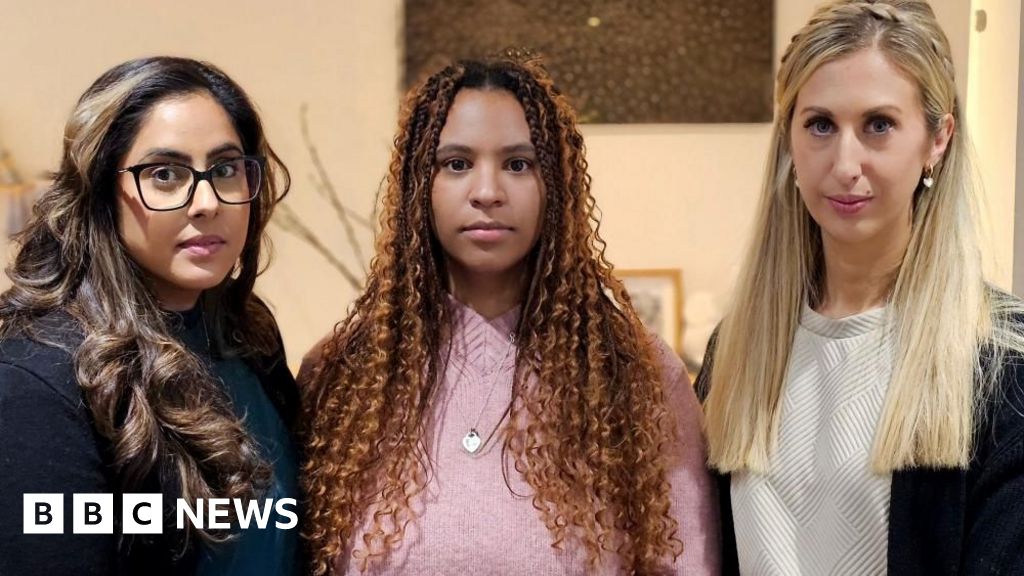
Health Secretary Wes Streeting has announced an urgent independent inquiry into maternity services at Leeds Teaching Hospitals NHS Trust, describing himself as "shocked" by families' experiences of "repeated maternity failures in Leeds - made worse by the unacceptable response of the trust." The decision comes after years of campaigning by bereaved families who reported feeling "gaslit, dismissed and even blamed" for what went wrong at one of Europe's largest teaching hospitals. Mr. Streeting emphasized the "stark contradiction between scale and safety standards" at the trust, which official data shows "remains an outlier on perinatal mortality."
The inquiry follows a June downgrade by the Care Quality Commission, which rated maternity services at the trust as "inadequate" and identified serious risks to women and babies. Inspectors highlighted a deep-rooted "blame culture" that made staff reluctant to raise concerns about incidents. Brendan Brown, chief executive of LTH NHS Trust, apologized to bereaved families and expressed hope that the inquiry would provide them with "answers." He stated the trust is "determined to do better" and is already taking significant steps to improve maternity and neonatal services following reviews by regulatory bodies.
Families affected by the failures have welcomed the inquiry but are calling for rigorous leadership, specifically requesting that midwife Donna Ockenden chair the investigation. Fiona Winser-Ramm, whose daughter Aliona died in 2020 after an inquest found multiple failures, emphasized the importance of ensuring the inquiry is "the best and most thorough that it can possibly be." She described how families have been "thrust into this life that none of us should be living," noting that their shared grief should never have brought them together under such circumstances.
Serious questions are now being raised about what Sir Julian Hartley, who led the trust for ten years until 2023 and now heads the Care Quality Commission, knew about the poor maternity care. In a statement, Sir Julian expressed being "truly sorry" for families' suffering and said that while he was "absolutely committed to ensuring good patient care across all services, including maternity," this commitment "wasn't enough to prevent some families suffering pain and loss." Lauren Caulfield, whose daughter Grace died in 2022, called it "completely unacceptable that nothing has been done to date" to examine Sir Julian's role, expressing hope that the inquiry will address this gap.