Dollar's Reserve Dominance Erodes as Yuan, Aussie Gain Ground
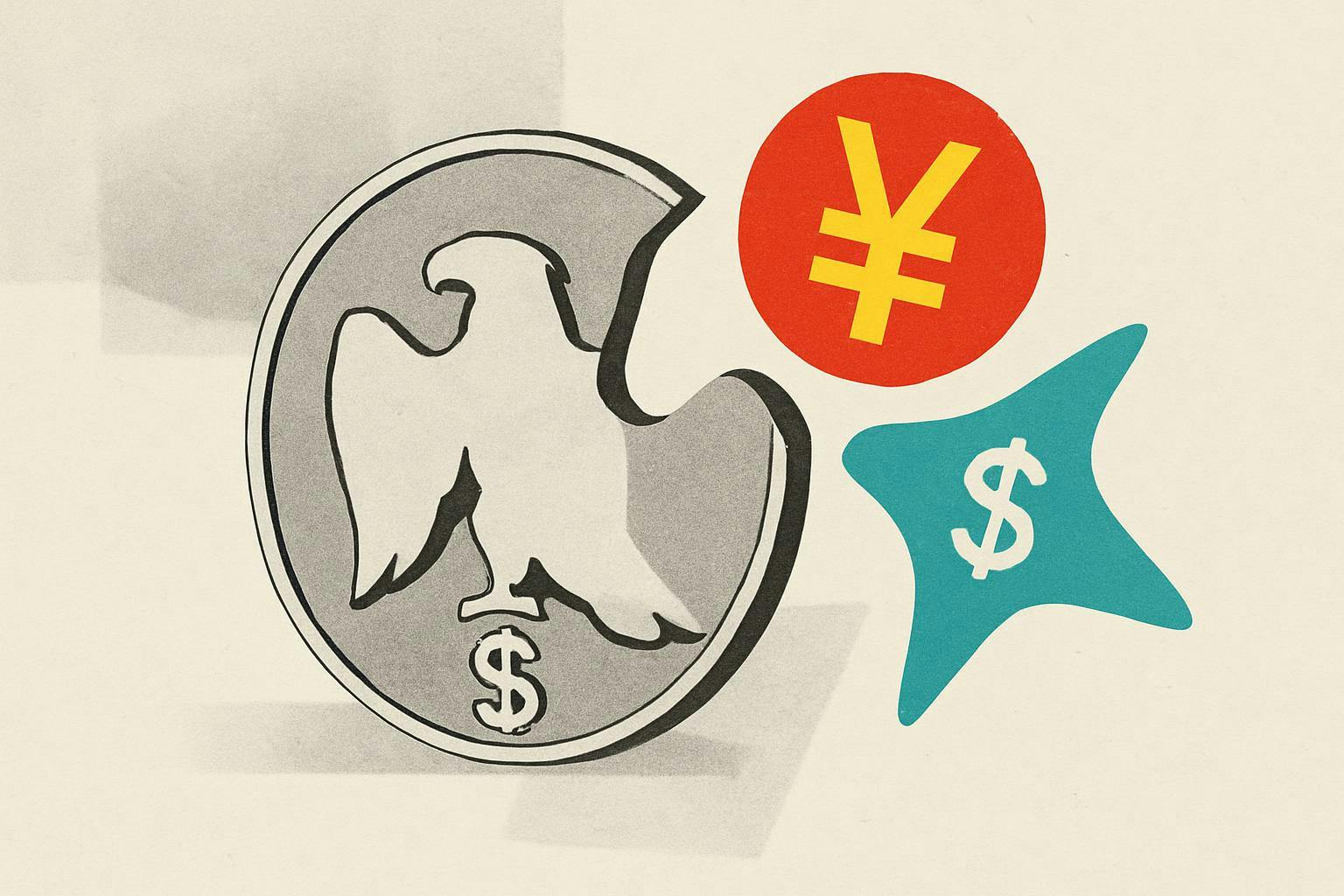
Fresh data from the International Monetary Fund reveals a subtle but notable shift in global currency reserves, with the Chinese yuan and Australian dollar gaining ground while the U.S. dollar's share slipped to its lowest level in over three decades. The dollar accounted for 56.32% of global foreign exchange reserves at the end of the second quarter, marking its smallest slice since the early 1990s. Meanwhile, both the yuan and Aussie dollar increased their holdings by 0.03 percentage points quarter-on-quarter, though each still represents just over 2% of the near $13 trillion reserve pile.
The IMF's adjusted data, published to account for dramatic currency swings, shows that the dollar lost 0.12 percentage points of market share when adjusted for exchange rate fluctuations. The euro, the world's second-largest reserve currency, also saw its position weaken, standing at 21.13% of overall reserves. The data was compiled from reserve managers across 149 economies, with total foreign exchange reserves climbing to $12.945 trillion from $12.540 trillion in the first quarter.
Currency movements played a dominant role in the shifting reserve landscape. The IMF noted that exchange rate effects explained 92% of the reduction in the dollar's share during the three months through June. The dollar index, which measures its performance against a basket of major currencies, fell more than 10% in the first half of the year—its largest drop since 1973—with the dollar weakening 8% in the second quarter alone. These swings were largely driven by market turbulence following Donald Trump's return to the White House and shifts in U.S. trade and economic policies.
Despite the dollar's declining share, analysts emphasize that the changes represent a gradual evolution rather than a rapid dedollarization. The fact that nearly all of the dollar's reserve share decline stems from currency movements—rather than a mass exit by central banks—reinforces its status as the primary safe-haven asset during turbulent times. The overall growth in global reserve assets, which increased by nearly $400 billion this quarter, indicates continued strong demand for reserve currencies amid ongoing market volatility.


